

Dinosaurs of the Deep: The Prehistoric Legacy of the White Sturgeon
Dinosaurs of the Deep: The Prehistoric Legacy of the White Sturgeon
Dinosaurs of the Deep: The Prehistoric Legacy of the White Sturgeon
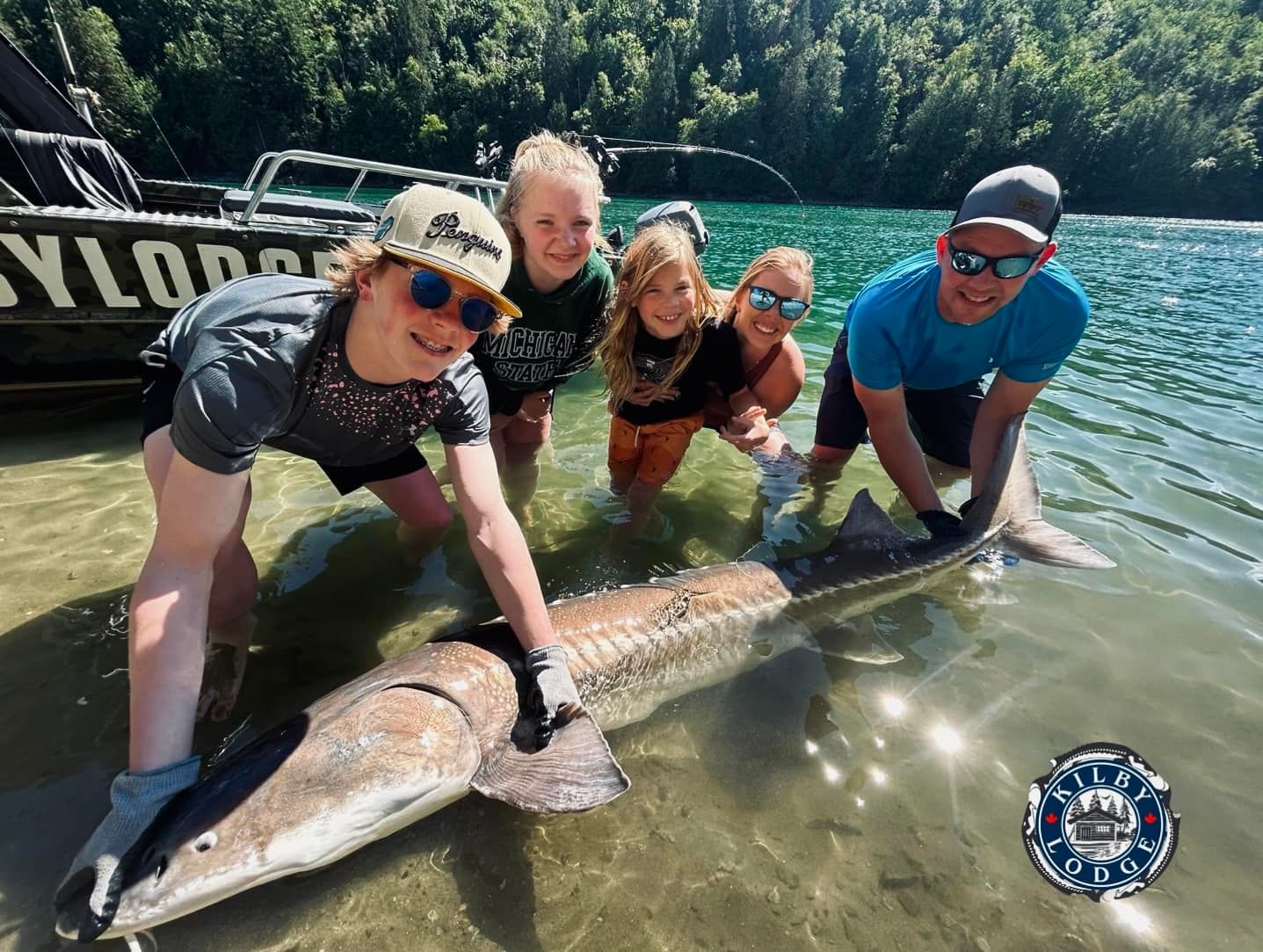
The image captures a rare encounter with the White Sturgeon (Acipenser transmontanus), a creature often referred to as a “living fossil.” These massive fish have https://bigfishmccall.com/ patrolled the river systems of North America since the Jurassic period, surviving multiple mass extinctions that wiped out the dinosaurs. Finding an individual of the size shown is a testament to the resilience of a species that can live for over a century and grow to lengths exceeding 10 feet.
Biological Marvels and Evolutionary Survivors
White Sturgeon are the largest freshwater fish in North America. They are easily identified by their primitive, shark-like appearance, featuring a cartilaginous skeleton and five rows of bony plates known as scutes that serve as natural body armor. Unlike most modern fish, they lack traditional scales. Evolution has equipped them with four sensory barbels—whisker-like organs near their blunt snouts—that help them locate prey like lamprey, smelt, and crayfish in the murky depths of riverbeds.
Their growth potential is staggering. Authenticated records show they can reach lengths of 20 feet and weigh up to 1,390 pounds. However, these giants grow slowly; a sturgeon typically does not reach sexual maturity until it is between 15 and 25 years old. This late maturation, combined with long spawning intervals of up to six years for females, makes them extremely vulnerable to environmental changes and overfishing.
Cultural and Ecological Significance
For millennia, the white sturgeon has held profound importance for Indigenous Peoples across the Pacific Northwest. Tribes such as the Stó:lō and Kathlamet utilized sturgeon as a primary food source, with archaeological evidence suggesting harvest practices dating back over 4,000 years. No part of the fish was wasted; bones were used for tools, and swim bladders were converted into glue. Today, many First Nations continue to lead conservation efforts, viewing the sturgeon as a cultural anchor and a being that cares for the departed.
Modern Conservation and Stewardship
In the late 1800s, commercial over-harvesting for caviar and meat drove many populations to the brink of extinction. Modern threats include habitat fragmentation caused by hydroelectric dams, which can block migration routes and disrupt spawning.
To protect these ancient giants, strict catch-and-release regulations are now in place in many regions, including the Fraser River in British Columbia and the Snake River in Idaho. Organizations like the Fraser River Sturgeon Conservation Society work alongside fisheries biologists to tag and track individuals, ensuring that even after a catch, the “dinosaurs” return safely to the depths to continue their 100-year journey.
Would you like to learn more about local fishing guides or how you can participate in sturgeon tagging programs?